


Scam Alert: Senior Scams Are on the Rise — Here’s How to Stay Protected
Scammers are increasingly targeting older adults, and the impact is real. According to the Federal Trade Commission, Americans over 60 lose billions of dollars each year to fraud.
These scams aren’t random — they’re strategic, emotional, and designed to create urgency, fear, or even trust.
This isn’t just a financial issue — it’s a community issue. The more we understand how these scams work, the better we can protect ourselves and the people we care about most.
Why Seniors Are Targeted
Fraudsters often target older adults because they may:
- Be more likely to answer unknown phone calls or respond to unsolicited messages
- Have retirement savings, home equity, or strong credit
- Be less familiar with newer, fast-changing digital scam tactics
- Be more trusting of authority figures or urgent requests
Scammers exploit emotion and timing — not intelligence, so even the sharpest of seniors can fall victim to these scams.
Most Common Senior Scams
1. Imposter Scams. Someone pretends to be from the Social Security Administration, Internal Revenue Service, or even a spouse or child in trouble. Watch for:
- Urgent demand for money
- Requests for gift cards, wire transfers, or crypto
- Pressure to “keep it a secret”
2. Tech Support Scams. A pop-up or caller claims your computer is infected and directs you to call a number. Red flags:
- Unexpected warnings about viruses
- Requests for remote access to your device
- Demands for payment to “fix” the issue
3. Romance Scams. Scammers build emotional relationships online, often through social media or dating platforms, then ask for money. Red flags:
- Rapid declarations of love
- Excuses for not meeting in person
- Requests for money due to “emergencies”
4. Prize, Lottery, or Sweepstakes Scams. “You’ve won!” — but only if you pay fees or taxes upfront. Red flags:
- Paying to claim a prize
- Being told you must act immediately
- Requests for banking or personal information
5. Medicare & Health Insurance Scams. Fraudsters pose as healthcare representatives asking for Medicare numbers or offering fake services. Red flags:
- Unsolicited calls about benefits
- Requests for your Medicare ID
- Offers that seem too good to be true
How to Protect Yourself (and Others)
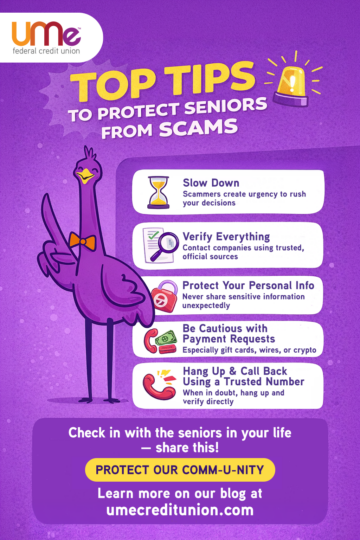
- Slow down. Scammers rely on urgency — take a moment before acting.
- Verify everything. Contact organizations directly using official numbers.
- Protect your information. Never share Social Security numbers, bank details, or passwords under pressure.
- Be cautious with payment requests. Especially gift cards, wire transfers, or cryptocurrency.
- Talk to someone you trust. A quick second opinion can make all the difference.
What To Do If U Suspect a Scam
- Stop communication immediately
- Report it to the Federal Trade Commission at ReportFraud.ftc.gov
- Contact your bank or Credit Union right away
- Tell someone you trust — sharing can help prevent further harm
Scammers succeed when people feel isolated, rushed, or unsure. The best defense is awareness, conversation, and looking out for one another.
Protecting seniors isn’t just about avoiding fraud — it’s about showing up for the people we care about and strengthening our comm-U-nity.
SOURCES
- Federal Trade Commission: Consumer Sentinel Network Data Book
- FBI Internet Crime Complaint Center: Elder Fraud Report
- AARP’s Fraud Watch Network
- National Council on Aging: Top Scams Targeting Seniors
- Consumer Financial Protection Bureau: Fraud Prevention Resources
Disclaimer: U matter to Me (to all of us) at UMe — and that’s why we do our best to deliver helpful information on our blog. Please note the following: (1) UMe Credit Union works hard to make certain that the information we post here is as accurate as humanly possible. But as you know, information can change and evolve quickly. While we try to update the blog on a regular basis, the content of some older posts may not be correct or up-to-date. (2) Some destinations on the World Wide Web that we link you to will exist on external websites. UMe Credit Union does not officially endorse any connected sites, nor do/did we compensate or get compensated by any entities to be featured in our posts (unless otherwise noted). (3) Everyone’s situation is unique and we advise you to consult with our personal bankers or your finance, tax, or legal professional for advice individualized to you!